
The 400m Is in Its Golden Age, and the World Record Is Hiding It
Nobody has beaten Wayde van Niekerk since 2016, so the one-lap sprint looks stuck. Underneath the record, half a million marks say the opposite: the event has never been this deep, and most of the change arrived in the last three seasons.
Foto: Erik van Leeuwen — CC BY-SA 4.0
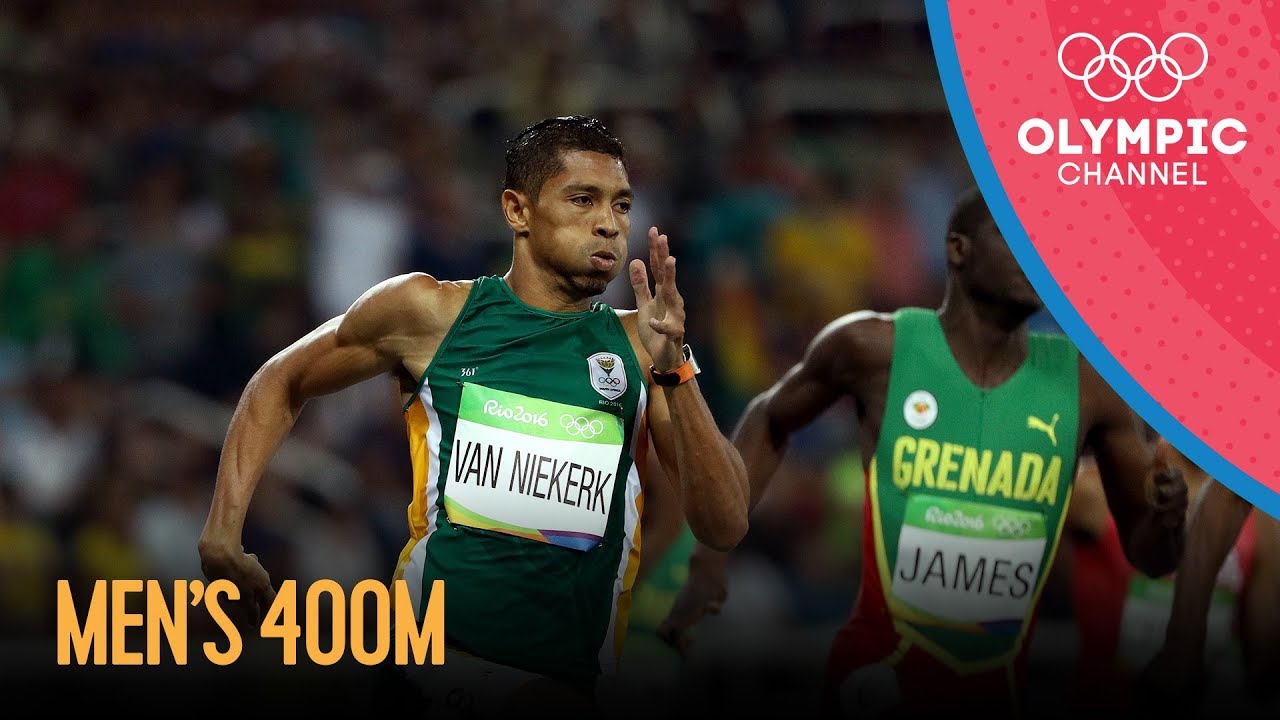
Wayde van Niekerk, Rio de Janeiro, 14 August 2016
A record that refuses to move
On 14 August 2016, in the Olympic final in Rio, Wayde van Niekerk ran 43.03 from lane eight and took fifteen hundredths off Michael Johnson's seventeen-year-old record. Ten years later it still stands, and nobody since has come within three tenths of it.
Van Niekerk ran the lap blind: from lane eight, the seven other finalists stayed behind his shoulder from the gun to the line. His coach, Ans Botha, was 74 at the time, a great-grandmother who had trained him since his student years in Bloemfontein.
Ten quiet years are easy to read as decline. This particular record has never moved often, though. Since fully automatic timing became the standard, the men's 400m world record has changed hands exactly four times in fifty-eight years. Lee Evans held it for nearly twenty years, Michael Johnson for seventeen. In this event, a decade without a new mark is the normal state of affairs.
studies.chart.showData
| Date | studies.chart.value | studies.chart.label | Meta |
|---|---|---|---|
| 1968-10-18 | 43.9 | Lee Evans | 43.86 — Mexico City, Mexico |
| 1988-08-17 | 43.3 | Butch Reynolds | 43.29 — Zürich, Switzerland |
| 1999-08-26 | 43.2 | Michael Johnson | 43.18 — Seville, Spain |
| 2016-08-14 | 43.0 | Wayde van Niekerk | 43.03 — Rio de Janeiro, Brazil |
Fonte: elitetrackr.com
The same four races, in metres on the track
Hundredths on a clock are abstract. Put the four record races in one lane instead: each man runs at his own record's average speed, and the photo is taken the instant van Niekerk crosses in 43.03.
Lee Evans, whose 43.86 stood for almost twenty years, is seven and a half metres from the line, with the better part of a second still to run. Butch Reynolds is almost two and a half metres back. Michael Johnson misses by less than a metre and a half: one long stride, after twenty-nine years of progress.
studies.chart.showData
| studies.chart.label | studies.chart.value |
|---|---|
| Michael Johnson — 43.18 · 1999 | −1,4 m |
| Butch Reynolds — 43.29 · 1988 | −2,4 m |
| Lee Evans — 43.86 · 1968 | −7,6 m |
Fonte: elitetrackr.com
A record that resists is the rule, not the exception
The average lifespan of a men's 400m world record in the electronic era is about fifteen years. Van Niekerk's ten years is not yet remarkable; Evans' mark was twice as old before it fell. On a ten-year window, this record simply moves too rarely to tell you anything about the health of the event.
The oldest mark on the chart carries its own footnote. Evans ran 43.86 in Mexico City in 1968, at 2,240 metres of altitude, days after Tommie Smith and John Carlos raised their fists on the podium; Evans collected his gold wearing a black beret. Thin air helped the time, and it still took twenty years to beat.
studies.chart.showData
| studies.chart.label | studies.chart.start | studies.chart.end | studies.chart.value |
|---|---|---|---|
| Lee Evans 43.86 | 1968 | 1988 | studies.article.yearsCount |
| Butch Reynolds 43.29 | 1988 | 1999 | studies.article.yearsCount |
| Michael Johnson 43.18 | 1999 | 2016 | studies.article.yearsCount |
| Wayde van Niekerk 43.03 | 2016 | 2026 | studies.article.yearsCount |
Fonte: elitetrackr.com
The field has never been deeper
A world record is one man on one day. To see whether an event is improving, look at the whole field. In 1990 the tenth-fastest man in the world ran 44.91. In 2026 the tenth-fastest ran 44.02, nine tenths quicker. Further down the list the gap is wider still: the hundredth-best man has gone from 46.48 to 45.17, an improvement of one and three tenths of a second.
For four decades those numbers barely moved. The tenth-best time sat between 44.7 and 44.9 through the 1990s and 2000s, and was still 44.81 in 2010. The break comes after 2015 and accelerates sharply from 2023. One exceptional athlete cannot drag a top-100 list along with him: the whole field moved.
The 2020 spike, where the tenth-best time collapses to 45.46, is the pandemic season. It is left in rather than smoothed away: it shows what a genuinely bad year looks like on this scale, which helps size up the recent improvement.
studies.chart.showData
studies.article.nthBest
| x | y |
|---|---|
| 1990 | 44.91 |
| 1991 | 44.88 |
| 1992 | 44.52 |
| 1993 | 44.58 |
| 1994 | 44.96 |
| 1995 | 44.81 |
| 1996 | 44.51 |
| 1997 | 44.67 |
| 1998 | 44.68 |
| 1999 | 44.6 |
| 2000 | 44.7 |
| 2001 | 44.7 |
| 2002 | 44.85 |
| 2003 | 44.83 |
| 2004 | 44.72 |
| 2005 | 44.7 |
| 2006 | 44.73 |
| 2007 | 44.62 |
| 2008 | 44.7 |
| 2009 | 44.81 |
| 2010 | 44.81 |
| 2011 | 44.78 |
| 2012 | 44.75 |
| 2013 | 44.82 |
| 2014 | 44.71 |
| 2015 | 44.36 |
| 2016 | 44.38 |
| 2017 | 44.48 |
| 2018 | 44.34 |
| 2019 | 44.31 |
| 2020 | 45.46 |
| 2021 | 44.48 |
| 2022 | 44.35 |
| 2023 | 44.26 |
| 2024 | 44.1 |
| 2025 | 44.14 |
| 2026 | 44.02 |
studies.article.nthBest
| x | y |
|---|---|
| 1990 | 45.88 |
| 1991 | 45.78 |
| 1992 | 45.5 |
| 1993 | 45.7 |
| 1994 | 45.62 |
| 1995 | 45.53 |
| 1996 | 45.32 |
| 1997 | 45.5 |
| 1998 | 45.46 |
| 1999 | 45.44 |
| 2000 | 45.36 |
| 2001 | 45.47 |
| 2002 | 45.67 |
| 2003 | 45.35 |
| 2004 | 45.48 |
| 2005 | 45.53 |
| 2006 | 45.41 |
| 2007 | 45.42 |
| 2008 | 45.46 |
| 2009 | 45.56 |
| 2010 | 45.44 |
| 2011 | 45.51 |
| 2012 | 45.38 |
| 2013 | 45.5 |
| 2014 | 45.32 |
| 2015 | 45.18 |
| 2016 | 45.27 |
| 2017 | 45.2 |
| 2018 | 44.94 |
| 2019 | 45.18 |
| 2020 | 45.97 |
| 2021 | 45.17 |
| 2022 | 45.17 |
| 2023 | 44.93 |
| 2024 | 44.99 |
| 2025 | 44.84 |
| 2026 | 44.75 |
studies.article.nthBest
| x | y |
|---|---|
| 1990 | 46.48 |
| 1991 | 46.53 |
| 1992 | 46.37 |
| 1993 | 46.4 |
| 1994 | 46.26 |
| 1995 | 46.03 |
| 1996 | 45.99 |
| 1997 | 46.07 |
| 1998 | 45.96 |
| 1999 | 45.9 |
| 2000 | 45.83 |
| 2001 | 45.93 |
| 2002 | 46.05 |
| 2003 | 45.88 |
| 2004 | 45.91 |
| 2005 | 46.02 |
| 2006 | 46.01 |
| 2007 | 45.97 |
| 2008 | 45.94 |
| 2009 | 45.88 |
| 2010 | 45.94 |
| 2011 | 45.88 |
| 2012 | 45.78 |
| 2013 | 45.86 |
| 2014 | 45.69 |
| 2015 | 45.62 |
| 2016 | 45.69 |
| 2017 | 45.61 |
| 2018 | 45.38 |
| 2019 | 45.58 |
| 2020 | 46.33 |
| 2021 | 45.56 |
| 2022 | 45.51 |
| 2023 | 45.37 |
| 2024 | 45.36 |
| 2025 | 45.21 |
| 2026 | 45.17 |
Fonte: elitetrackr.com
Why not simply count the men under 45 seconds
The intuitive way to show depth is to count how many men break a round number. By that measure the case looks overwhelming: fourteen men ran under 45 seconds in 1990, around twenty a year through the 2000s, then 51 in 2023, 67 in 2025 and 78 in 2026.
That measure cannot be trusted on its own. This database holds 516 men's 400m marks for 1990 and 37,000 for 2026, seventy-two times more. Much of that growth is better record-keeping rather than more running: college meetings, regional championships and minor fixtures that were simply never captured thirty years ago. A count of sub-45 performances rises partly because we are looking harder.
This is exactly why the previous chart uses the Nth-fastest time instead. To know the tenth-best mark of 1990 you only need the top ten of 1990 to have been recorded, and annual world lists have always captured that. Adding ten thousand 48-second college races cannot shift it by a hundredth. The counts are shown here for completeness; the argument rests on the times.
studies.chart.showData
studies.article.sub45Indexed
| x | y |
|---|---|
| 1990 | 100 |
| 1991 | 93 |
| 1992 | 164 |
| 1993 | 136 |
| 1994 | 79 |
| 1995 | 100 |
| 1996 | 236 |
| 1997 | 129 |
| 1998 | 171 |
| 1999 | 136 |
| 2000 | 164 |
| 2001 | 150 |
| 2002 | 121 |
| 2003 | 129 |
| 2004 | 143 |
| 2005 | 171 |
| 2006 | 150 |
| 2007 | 121 |
| 2008 | 164 |
| 2009 | 114 |
| 2010 | 150 |
| 2011 | 143 |
| 2012 | 157 |
| 2013 | 107 |
| 2014 | 121 |
| 2015 | 243 |
| 2016 | 186 |
| 2017 | 207 |
| 2018 | 364 |
| 2019 | 243 |
| 2020 | 14 |
| 2021 | 214 |
| 2022 | 221 |
| 2023 | 364 |
| 2024 | 364 |
| 2025 | 479 |
| 2026 | 557 |
studies.article.totalIndexed
| x | y |
|---|---|
| 1990 | 100 |
| 1991 | 81 |
| 1992 | 77 |
| 1993 | 110 |
| 1994 | 102 |
| 1995 | 118 |
| 1996 | 245 |
| 1997 | 255 |
| 1998 | 495 |
| 1999 | 576 |
| 2000 | 637 |
| 2001 | 650 |
| 2002 | 773 |
| 2003 | 831 |
| 2004 | 828 |
| 2005 | 845 |
| 2006 | 884 |
| 2007 | 993 |
| 2008 | 870 |
| 2009 | 1302 |
| 2010 | 1827 |
| 2011 | 2445 |
| 2012 | 2964 |
| 2013 | 3539 |
| 2014 | 3998 |
| 2015 | 4336 |
| 2016 | 4420 |
| 2017 | 5022 |
| 2018 | 5346 |
| 2019 | 6474 |
| 2020 | 2574 |
| 2021 | 5658 |
| 2022 | 6484 |
| 2023 | 6342 |
| 2024 | 7641 |
| 2025 | 8552 |
| 2026 | 7172 |
Fonte: elitetrackr.com
A third of the all-time top 100 was set in the last six years
If the field is genuinely faster, the all-time lists should be churning, and they are. Of the hundred fastest men in history, 37 set their mark in the 2020s, a decade barely six seasons old. The entire 2010s account for 25. The 2000s, a decade remembered for Jeremy Wariner's dominance, contributed just 8. Johnson and Wariner, who own two of those decades between them, were coached by the same man, Clyde Hart of Baylor University.
The same pattern holds at the sharp end: eleven of the twenty-five fastest performances ever recorded were run in the 2020s.
studies.chart.showData
| studies.chart.label | studies.chart.value | Sub |
|---|---|---|
| 1960s | 2 | — |
| 1970s | 4 | — |
| 1980s | 7 | — |
| 1990s | 17 | — |
| 2000s | 8 | — |
| 2010s | 25 | — |
| 2020s | 37 | — |
Fonte: elitetrackr.com
Eight of the twenty fastest men ever ran their time in the last three seasons
The all-time top twenty used to go years without a new name. Samuel Ogazi, Busang Collen Kebinatshipi, Quincy Hall, Matthew Hudson-Smith, Jereem Richards, Muzala Samukonga, Zakithi Nene and Jacory Patterson all entered it between 2024 and 2026. Only three men in history have run faster than Ogazi's 43.38, and he did it at twenty years old.
| # | studies.article.col.athlete | studies.article.col.country | studies.article.col.time | studies.article.col.year | studies.article.col.age |
|---|---|---|---|---|---|
| 1 | Wayde Van Niekerk | África do Sul | 43.03 | 2016 | 24.1 |
| 2 | Michael Johnson | Estados Unidos | 43.18 | 1999 | 32 |
| 3 | Butch Reynolds | Estados Unidos | 43.29 | 1988 | 24.2 |
| 4 | Samuel Ogazi | Nigéria | 43.38 | 2026 | 20.1 |
| 5 | Busang Collen Kebinatshipi | Botsuana | 43.39 | 2026 | 22.6 |
| 6 | Quincy Hall | Estados Unidos | 43.40 | 2024 | 26 |
| 7 | Matthew Hudson-Smith | Reino Unido | 43.44 | 2024 | 29.8 |
| 8 | Jeremy Wariner | Estados Unidos | 43.45 | 2007 | 23.6 |
| 9 | Michael Norman | Estados Unidos | 43.45 | 2019 | 21.4 |
| 10 | Steven Gardiner | Bahamas | 43.48 | 2019 | 24.1 |
| 11 | Quincy Watts | Estados Unidos | 43.50 | 1992 | 22.1 |
| 12 | Fred Kerley | Estados Unidos | 43.64 | 2019 | 24.2 |
| 13 | LaShawn Merritt | Estados Unidos | 43.65 | 2015 | 29.2 |
| 14 | Jereem Richards | Trinidad e Tobago | 43.68 | 2026 | 32.6 |
| 15 | Champion Allison | Estados Unidos | 43.70 | 2022 | 23.6 |
| 16 | Isaac Makwala | Botsuana | 43.72 | 2015 | 29.8 |
| 17 | Kirani James | Granada | 43.74 | 2014 | 21.8 |
| 18 | Muzala Samukonga | Zâmbia | 43.74 | 2024 | 21.7 |
| 19 | Zakithi Nene | África do Sul | 43.76 | 2025 | 27.2 |
| 20 | Jacory Patterson | Estados Unidos | 43.78 | 2026 | 26.6 |









Fonte: elitetrackr.com
Where the fast men come from
Two hundred and twenty-one nations have at least one 400m mark in our data. Sixty-nine have a man under 45 seconds. Having athletics and producing a quarter-miler are different things, and the map shows where the second one happens.
Twelve nations have a man under 44 seconds: South Africa, the United States, Nigeria, Botswana, Great Britain, the Bahamas, Trinidad and Tobago, Grenada, Zambia, Colombia, Jamaica and Saudi Arabia. Half of them have fewer than five million people, and Grenada has a hundred and twenty-six thousand. The brightest colour on this map does not follow the size of the country.
Move the filter and the map empties fast. At one man under 45 seconds the map holds sixty-nine countries, and twenty-seven of them have exactly one, often once in their history. Push it to twenty-five and two countries are left: the United States and Jamaica.
The lap itself is older than any nation on the map. The Greek diaulos, two lengths of the stadium for roughly 384 metres, was run at Olympia from 724 BC; the 400m is its direct descendant.
- studies.map.tier5Count
- studies.map.tier4
- studies.map.tier3
- studies.map.tier2
- studies.map.tier1
studies.map.groupSub44
- Estados Unidos43.18188
- Jamaica43.9333
- Reino Unido43.4421
- Trinidad e Tobago43.6816
- África do Sul43.0313
- Nigéria43.3812
- Botsuana43.3912
- Bahamas43.4810
- Granada43.745
- Zâmbia43.742
- Colômbia43.932
- Arábia Saudita43.932



studies.map.groupOthers
- Quênia44.1817
- Austrália44.3813
- Catar44.0712
- República Dominicana44.116
- Bélgica44.156
- FRG44.506





studies.map.showAllNations
- França44.245
- Brasil44.295
- Japão44.445
- Canadá44.054
- Cuba44.144
- GDR44.334
- Zimbábue44.584
- Polônia44.624
- Barein44.363
- Itália44.453
- Espanha44.693
- México44.312
- Noruega44.392
- Barbados44.432
- Hungria44.472
- Países Baixos44.482
- Rússia44.562
- Sri Lanka44.612
- Alemanha44.662
- Eslovênia44.702
- Sudão44.762
- Irlanda44.772
- Kuwait44.842
- Líbia44.982
- Congo - Kinshasa44.101
- Costa do Marfim44.301
- Uganda44.371
- Porto Rico44.491
- Argentina44.531
- Omã44.561
- Suécia44.561
- Venezuela44.581
- Costa Rica44.601
- Panamá44.601
- URS44.601
- Maurício44.691
- Romênia44.741
- Ilhas Virgens Americanas44.771
- Santa Lúcia44.771
- Tchéquia44.791
- Portugal44.791
- Ucrânia44.811
- Emirados Árabes Unidos44.851
- Guiana44.871
- Grécia44.881
- Cazaquistão44.941
- Senegal44.941
- Gana44.951
- Índia44.981
- Ilhas Cayman44.991
- Suíça44.991

















































studies.chart.showData
| studies.chart.label | studies.map.best | studies.map.holder | studies.chart.year | studies.map.under45 |
|---|---|---|---|---|
| RSA · África do Sul | 43.03 | Wayde Van Niekerk | 2016 | 13 |
| USA · Estados Unidos | 43.18 | Michael Johnson | 1999 | 188 |
| NGR · Nigéria | 43.38 | Samuel Ogazi | 2026 | 12 |
| BOT · Botsuana | 43.39 | Busang Collen Kebinatshipi | 2026 | 12 |
| GBR · Reino Unido | 43.44 | Matthew Hudson-Smith | 2024 | 21 |
| BAH · Bahamas | 43.48 | Steven Gardiner | 2019 | 10 |
| TTO · Trinidad e Tobago | 43.68 | Jereem Richards | 2026 | 16 |
| GRN · Granada | 43.74 | Kirani James | 2014 | 5 |
| ZAM · Zâmbia | 43.74 | Muzala Samukonga | 2024 | 2 |
| COL · Colômbia | 43.93 | Anthony José Zambrano | 2021 | 2 |
| JAM · Jamaica | 43.93 | Rusheen Mcdonald | 2015 | 33 |
| KSA · Arábia Saudita | 43.93 | Youssef Ahmed Masrahi | 2015 | 2 |
| CAN · Canadá | 44.05 | Christopher Morales Williams | 2024 | 4 |
| QAT · Catar | 44.07 | Abdalelah Haroun | 2018 | 12 |
| COD · Congo - Kinshasa | 44.10 | Gary Kikaya | 2006 | 1 |
| DOM · República Dominicana | 44.11 | Luguelín Santos | 2015 | 6 |
| CUB · Cuba | 44.14 | Roberto Hernández | 1990 | 4 |
| BEL · Bélgica | 44.15 | Alexander Doom | 2024 | 6 |
| KEN · Quênia | 44.18 | Samson Kitur | 1992 | 17 |
| FRA · França | 44.24 | Samuel Vessat | 2026 | 5 |
| BRA · Brasil | 44.29 | Sanderlei Parrela | 1999 | 5 |
| CIV · Costa do Marfim | 44.30 | Gabriel Tiacoh | 1986 | 1 |
| MEX · México | 44.31 | Alejandro Cárdenas | 1999 | 2 |
| GDR · GDR | 44.33 | Thomas Schönlebe | 1987 | 4 |
| BRN · Barein | 44.36 | Ali Khamis Khamis | 2016 | 3 |
| UGA · Uganda | 44.37 | Davis Kamoga | 1997 | 1 |
| AUS · Austrália | 44.38 | Darren Clark | 1988 | 13 |
| NOR · Noruega | 44.39 | Håvard Bentdal Ingvaldsen | 2023 | 2 |
| BAR · Barbados | 44.43 | Jonathan Jones | 2022 | 2 |
| JPN · Japão | 44.44 | Yuki Joseph Nakajima | 2025 | 5 |
| ITA · Itália | 44.45 | Edoardo Scotti | 2025 | 3 |
| HUN · Hungria | 44.47 | Attila Molnár | 2026 | 2 |
| NED · Países Baixos | 44.48 | Liemarvin Bonevacia | 2021 | 2 |
| PUR · Porto Rico | 44.49 | José Figueroa | 2026 | 1 |
| FRG · FRG | 44.50 | Erwin Skamrahl | 1983 | 6 |
| ARG · Argentina | 44.53 | Elián Larregina | 2025 | 1 |
| OMA · Omã | 44.56 | Mohamed Al Malky | 1988 | 1 |
| RUS · Rússia | 44.56 | Aleksey Danilov | 2025 | 2 |
| SWE · Suécia | 44.56 | Johan Wissman | 2007 | 1 |
| VEN · Venezuela | 44.58 | Javier Gómez | 2026 | 1 |
| ZIM · Zimbábue | 44.58 | Lewis Banda | 2004 | 4 |
| CRC · Costa Rica | 44.60 | Nery Brenes | 2016 | 1 |
| PAN · Panamá | 44.60 | Bayano Kamani | 2001 | 1 |
| URS · URS | 44.60 | Viktor Markin | 1980 | 1 |
| SRI · Sri Lanka | 44.61 | Sugath R. A. Thilakaratne | 1998 | 2 |
| POL · Polônia | 44.62 | Tomasz Czubak | 1999 | 4 |
| GER · Alemanha | 44.66 | Ingo Schultz | 2001 | 2 |
| ESP · Espanha | 44.69 | Bruno Hortelano | 2018 | 3 |
| MRI · Maurício | 44.69 | Eric Milazar | 2001 | 1 |
| SLO · Eslovênia | 44.70 | Rok Ferlan | 2025 | 2 |
| ROU · Romênia | 44.74 | Mihai Sorin Dringo | 2025 | 1 |
| SUD · Sudão | 44.76 | Hassan El Kashief | 1982 | 2 |
| IRL · Irlanda | 44.77 | David Gillick | 2009 | 2 |
| ISV · Ilhas Virgens Americanas | 44.77 | Tabarie Henry | 2009 | 1 |
| LCA · Santa Lúcia | 44.77 | Michael Joseph | 2023 | 1 |
| CZE · Tchéquia | 44.79 | Pavel Maslák | 2014 | 1 |
| POR · Portugal | 44.79 | João Coelho | 2023 | 1 |
| UKR · Ucrânia | 44.81 | Oleksandr Pohorilko | 2025 | 1 |
| KUW · Kuwait | 44.84 | Yousef Karam | 2019 | 2 |
| UAE · Emirados Árabes Unidos | 44.85 | Suleiman Abdulrahman | 2026 | 1 |
| GUY · Guiana | 44.87 | Malachi Austin | 2026 | 1 |
| GRE · Grécia | 44.88 | George John Franks | 2026 | 1 |
| KAZ · Cazaquistão | 44.94 | Mikhail Litvin | 2022 | 1 |
| SEN · Senegal | 44.94 | Cheikh Tidiane Diouf | 2024 | 1 |
| GHA · Gana | 44.95 | William Owadie Opare | 2026 | 1 |
| IND · Índia | 44.98 | Vishal Thennarasu Kayalvizhi | 2026 | 1 |
| LBA · Líbia | 44.98 | Mohamed Ashour Khwaja | 2010 | 2 |
| CAY · Ilhas Cayman | 44.99 | Jamal Walton | 2017 | 1 |
| SUI · Suíça | 44.99 | Mathias Rusterholz | 1996 | 1 |
Fonte: elitetrackr.com
The United States still produces most of the fast men
Of the 481 men who have broken 45 seconds, 188 are American: thirty-nine percent of the whole group, and twenty of the thirty-five men who have gone under 44. Jamaica is a distant second with 33, then Great Britain with 21. On raw numbers the hierarchy has not shifted in fifty years.
studies.chart.showData
| studies.chart.label | studies.chart.value | Sub |
|---|---|---|
| Estados Unidos (USA) | 188 | studies.article.ofWhichSub44 |
| Jamaica (JAM) | 33 | studies.article.ofWhichSub44 |
| Reino Unido (GBR) | 21 | studies.article.ofWhichSub44 |
| Quênia (KEN) | 17 | — |
| Trinidad e Tobago (TTO) | 16 | studies.article.ofWhichSub44 |
| África do Sul (RSA) | 13 | studies.article.ofWhichSub44 |
| Austrália (AUS) | 13 | — |
| Botsuana (BOT) | 12 | studies.article.ofWhichSub44 |
| Nigéria (NGR) | 12 | studies.article.ofWhichSub44 |
| Catar (QAT) | 12 | — |
| Bahamas (BAH) | 10 | studies.article.ofWhichSub44 |
| FRG (FRG) | 6 | — |
| Bélgica (BEL) | 6 | — |
| República Dominicana (DOM) | 6 | — |
| Granada (GRN) | 5 | studies.article.ofWhichSub44 |
Fonte: elitetrackr.com
Adjust for population and the United States finishes last
Divide those totals by population and the table inverts completely. Grenada, home to 126,000 people including Kirani James, has produced almost 40 sub-45 men per million inhabitants. The Bahamas manages 25 per million. Trinidad and Tobago and Jamaica sit near 12. Botswana, which has put two men under 44 seconds, reaches 4.5.
The United States, with more sub-45 men than the next nine countries combined, produces 0.55 per million, some seventy times fewer than Grenada. American dominance in the 400m is built on volume. Adjust for population and the Caribbean is in another league entirely.
American dominance in the 400m is built on volume. Adjust for population and the Caribbean is in another league entirely.
studies.chart.showData
| studies.chart.label | studies.chart.value | Sub |
|---|---|---|
| Granada (GRN) | 39.68 | studies.article.fromPopulation |
| Bahamas (BAH) | 25.00 | studies.article.fromPopulation |
| Trinidad e Tobago (TTO) | 11.68 | studies.article.fromPopulation |
| Jamaica (JAM) | 11.66 | studies.article.fromPopulation |
| Botsuana (BOT) | 4.48 | studies.article.fromPopulation |
| Catar (QAT) | 3.93 | studies.article.fromPopulation |
| Barein (BRN) | 1.88 | studies.article.fromPopulation |
| Estados Unidos (USA) | 0.55 | studies.article.fromPopulation |
| República Dominicana (DOM) | 0.53 | studies.article.fromPopulation |
| Bélgica (BEL) | 0.51 | studies.article.fromPopulation |
| Austrália (AUS) | 0.49 | studies.article.fromPopulation |
| Cuba (CUB) | 0.37 | studies.article.fromPopulation |
| Reino Unido (GBR) | 0.31 | studies.article.fromPopulation |
| Quênia (KEN) | 0.31 | studies.article.fromPopulation |
| Zimbábue (ZIM) | 0.24 | studies.article.fromPopulation |
Fonte: elitetrackr.com

Dominance, age and the perfect day

Michael Johnson ran more than one sub-44 race in six, on his own
One number does not fit the story so far. In the whole history of the event, 130 races have been run under 44 seconds, by 35 different men. Michael Johnson accounts for 23 of them: 17.7 percent, run by one athlete. The next closest is Kirani James with 10, then Jeremy Wariner and LaShawn Merritt with 9 each.
This is the sense in which the modern era has genuinely not caught up. The field is deeper than Johnson's ever was, and the current top twenty is younger and far more international. But nobody has come close to reproducing his habit of running 43-point on demand, season after season. The field got deeper without producing a second Johnson.
studies.chart.showData
| studies.chart.label | studies.chart.value | studies.chart.year |
|---|---|---|
| Lee Evans · USA | 43.86 | 1968-10-18 |
| Larry James · USA | 43.97 | 1968-10-18 |
| Butch Reynolds · USA | 43.93 | 1988-07-20 |
| Danny Everett · USA | 43.98 | 1988-07-20 |
| Butch Reynolds · USA | 43.29 | 1988-08-17 |
| Steve Lewis · USA | 43.87 | 1988-09-28 |
| Butch Reynolds · USA | 43.93 | 1988-09-28 |
| Quincy Watts · USA | 43.97 | 1992-06-24 |
| Danny Everett · USA | 43.81 | 1992-06-26 |
| Michael Johnson · USA | 43.98 | 1992-07-10 |
| Quincy Watts · USA | 43.71 | 1992-08-03 |
| Quincy Watts · USA | 43.50 | 1992-08-05 |
| Quincy Watts · USA | 43.83 | 1992-08-19 |
| Michael Johnson · USA | 43.74 | 1993-06-19 |
| Michael Johnson · USA | 43.65 | 1993-08-17 |
| Michael Johnson · USA | 43.94 | 1993-08-27 |
| Michael Johnson · USA | 43.90 | 1994-09-06 |
| Michael Johnson · USA | 43.66 | 1995-06-16 |
| Michael Johnson · USA | 43.86 | 1995-07-21 |
| Michael Johnson · USA | 43.39 | 1995-08-09 |
| Michael Johnson · USA | 43.88 | 1995-08-16 |
| Michael Johnson · USA | 43.44 | 1996-06-19 |
| Butch Reynolds · USA | 43.91 | 1996-06-19 |
| Michael Johnson · USA | 43.66 | 1996-07-03 |
| Michael Johnson · USA | 43.49 | 1996-07-29 |
| Michael Johnson · USA | 43.75 | 1997-04-19 |
| Michael Johnson · USA | 43.76 | 1998-07-21 |
| Michael Johnson · USA | 43.96 | 1998-08-08 |
| Michael Johnson · USA | 43.68 | 1998-08-12 |
| Michael Johnson · USA | 43.92 | 1999-07-02 |
| Michael Johnson · USA | 43.95 | 1999-08-24 |
| Michael Johnson · USA | 43.18 | 1999-08-26 |
| Michael Johnson · USA | 43.90 | 2000-03-31 |
| Michael Johnson · USA | 43.92 | 2000-06-24 |
| Michael Johnson · USA | 43.68 | 2000-07-16 |
| Michael Johnson · USA | 43.84 | 2000-09-25 |
| Avard Moncur · BAH | 43.90 | 2001-04-07 |
| Jeremy Wariner · USA | 43.93 | 2005-08-12 |
| Jeremy Wariner · USA | 43.91 | 2006-07-08 |
| Jeremy Wariner · USA | 43.62 | 2006-07-14 |
| Jeremy Wariner · USA | 43.99 | 2006-07-28 |
| Jeremy Wariner · USA | 43.50 | 2007-08-07 |
| Jeremy Wariner · USA | 43.45 | 2007-08-31 |
| LaShawn Merritt · USA | 43.96 | 2007-08-31 |
| Jeremy Wariner · USA | 43.98 | 2008-06-06 |
| Jeremy Wariner · USA | 43.86 | 2008-07-18 |
| LaShawn Merritt · USA | 43.75 | 2008-08-21 |
| Jeremy Wariner · USA | 43.82 | 2008-08-29 |
| LaShawn Merritt · USA | 43.98 | 2008-09-02 |
| Kirani James · GRN | 43.94 | 2012-08-06 |
| Kirani James · GRN | 43.96 | 2013-07-06 |
| LaShawn Merritt · USA | 43.74 | 2013-08-13 |
| Kirani James · GRN | 43.97 | 2014-05-31 |
| LaShawn Merritt · USA | 43.97 | 2014-05-31 |
| Kirani James · GRN | 43.74 | 2014-07-03 |
| LaShawn Merritt · USA | 43.92 | 2014-07-03 |
| Kirani James · GRN | 43.95 | 2015-05-30 |
| Wayde Van Niekerk · RSA | 43.96 | 2015-07-04 |
| Isaac Makwala · BOT | 43.72 | 2015-07-05 |
| Rusheen Mcdonald · JAM | 43.93 | 2015-08-23 |
| Youssef Ahmed Masrahi · KSA | 43.93 | 2015-08-23 |
| Wayde Van Niekerk · RSA | 43.48 | 2015-08-26 |
| LaShawn Merritt · USA | 43.65 | 2015-08-26 |
| Kirani James · GRN | 43.78 | 2015-08-26 |
| LaShawn Merritt · USA | 43.97 | 2016-07-03 |
| Wayde Van Niekerk · RSA | 43.03 | 2016-08-14 |
| Kirani James · GRN | 43.76 | 2016-08-14 |
| LaShawn Merritt · USA | 43.85 | 2016-08-14 |
| Fred Kerley · USA | 43.70 | 2017-05-26 |
| Wayde Van Niekerk · RSA | 43.62 | 2017-07-06 |
| Isaac Makwala · BOT | 43.92 | 2017-07-14 |
| Wayde Van Niekerk · RSA | 43.73 | 2017-07-21 |
| Isaac Makwala · BOT | 43.84 | 2017-07-21 |
| Steven Gardiner · BAH | 43.89 | 2017-08-06 |
| Wayde Van Niekerk · RSA | 43.98 | 2017-08-08 |
| Isaac Makwala · BOT | 43.95 | 2017-08-24 |
| Steven Gardiner · BAH | 43.87 | 2018-05-04 |
| Steven Gardiner · BAH | 43.99 | 2018-05-12 |
| Michael Norman · USA | 43.61 | 2018-06-08 |
| Akeem Bloomfield · JAM | 43.94 | 2018-06-08 |
| Michael Norman · USA | 43.45 | 2019-04-20 |
| Fred Kerley · USA | 43.64 | 2019-07-27 |
| Michael Norman · USA | 43.79 | 2019-07-27 |
| Steven Gardiner · BAH | 43.48 | 2019-10-04 |
| Randolph Ross · USA | 43.85 | 2021-06-11 |
| Kirani James · GRN | 43.88 | 2021-08-02 |
| Anthony José Zambrano · COL | 43.93 | 2021-08-02 |
| Steven Gardiner · BAH | 43.85 | 2021-08-05 |
| Michael Norman · USA | 43.60 | 2022-05-28 |
| Michael Norman · USA | 43.56 | 2022-06-25 |
| Champion Allison · USA | 43.70 | 2022-06-25 |
| Muzala Samukonga · ZAM | 43.91 | 2023-04-29 |
| Steven Gardiner · BAH | 43.74 | 2023-07-18 |
| Quincy Hall · USA | 43.80 | 2024-07-12 |
| Matthew Hudson-Smith · GBR | 43.74 | 2024-07-20 |
| Kirani James · GRN | 43.78 | 2024-08-06 |
| Muzala Samukonga · ZAM | 43.81 | 2024-08-06 |
| Quincy Hall · USA | 43.95 | 2024-08-06 |
| Quincy Hall · USA | 43.40 | 2024-08-07 |
| Matthew Hudson-Smith · GBR | 43.44 | 2024-08-07 |
| Muzala Samukonga · ZAM | 43.74 | 2024-08-07 |
| Jereem Richards · TTO | 43.78 | 2024-08-07 |
| Kirani James · GRN | 43.87 | 2024-08-07 |
| Matthew Hudson-Smith · GBR | 43.96 | 2024-08-22 |
| Muzala Samukonga · ZAM | 43.99 | 2024-08-30 |
| Jacory Patterson · USA | 43.98 | 2025-05-03 |
| Zakithi Nene · RSA | 43.76 | 2025-05-31 |
| Khaleb Mcrae · USA | 43.91 | 2025-06-22 |
| Jacory Patterson · USA | 43.85 | 2025-08-28 |
| Jacory Patterson · USA | 43.90 | 2025-09-14 |
| Busang Collen Kebinatshipi · BOT | 43.61 | 2025-09-16 |
| Busang Collen Kebinatshipi · BOT | 43.53 | 2025-09-18 |
| Jereem Richards · TTO | 43.72 | 2025-09-18 |
| Samuel Ogazi · NGR | 43.95 | 2026-05-16 |
| Busang Collen Kebinatshipi · BOT | 43.92 | 2026-05-23 |
| Samuel Ogazi · NGR | 43.82 | 2026-05-29 |
| Justin Braun · USA | 43.99 | 2026-05-29 |
| Samuel Ogazi · NGR | 43.38 | 2026-06-12 |
| Jonathan Simms · USA | 43.92 | 2026-06-12 |
| Busang Collen Kebinatshipi · BOT | 43.54 | 2026-06-28 |
| Zakithi Nene · RSA | 43.89 | 2026-06-28 |
| Busang Collen Kebinatshipi · BOT | 43.44 | 2026-07-10 |
| Jacory Patterson · USA | 43.96 | 2026-07-10 |
| Busang Collen Kebinatshipi · BOT | 43.59 | 2026-08-22 |
| Rai Benjamin · USA | 43.83 | 2026-08-22 |
| Busang Collen Kebinatshipi · BOT | 43.40 | 2026-09-04 |
| Jereem Richards · TTO | 43.68 | 2026-09-04 |
| Jacory Patterson · USA | 43.78 | 2026-09-04 |
| Christopher Bailey · USA | 43.97 | 2026-09-04 |
| Busang Collen Kebinatshipi · BOT | 43.39 | 2026-09-11 |
Fonte: elitetrackr.com
Thirty seasons, and who owned each one
Rank every man by his best time of the year, and the last thirty seasons sort themselves into reigns. Michael Johnson led the world five years running, from 1996 to 2000, and won a global title in four of them. Jeremy Wariner took four straight from 2004. LaShawn Merritt and Kirani James then traded the lead for six years, and Wayde van Niekerk closed the sequence with three seasons on top, the middle one his 43.03.
The other reading is what happens between the reigns. From 2001 to 2003 the world lead changed hands every year and never went under 43.90. And since 2020 it has changed hands every single year: seven different names in seven seasons (2021 was shared), with Steven Gardiner the only man to hold it twice. The last back-to-back leader is Michael Norman in 2018 and 2019, and he had no title to show for either. The ring marks the year the world leader also won the Olympics or the Worlds, and the two line up less often than one would guess.
The colour tells the rest. A season's best under 43.50 has happened ten times in thirty years: Johnson twice, Wariner once, van Niekerk twice, then Norman and Gardiner in the same summer of 2019, Hall in 2024, and Ogazi and Kebinatshipi in 2026. Five of the ten belong to the last seven seasons. More men than ever can lead the world for a season. Since van Niekerk, nobody has managed to stay there.
studies.chart.showData
Michael Johnson
| studies.chart.season | studies.chart.value | studies.chart.rank | studies.chart.gold |
|---|---|---|---|
| 1996 | 43.44 | 1 | ● |
| 1997 | 43.75 | 1 | ● |
| 1998 | 43.68 | 1 | |
| 1999 | 43.18 | 1 | ● |
| 2000 | 43.68 | 1 | ● |
Alvin Harrison
| studies.chart.season | studies.chart.value | studies.chart.rank | studies.chart.gold |
|---|---|---|---|
| 1996 | 44.09 | 3 | |
| 1998 | 44.19 | 3 | |
| 2000 | 44.18 | 2 |
Butch Reynolds
| studies.chart.season | studies.chart.value | studies.chart.rank | studies.chart.gold |
|---|---|---|---|
| 1996 | 43.91 | 2 | |
| 1997 | 44.08 | 2 |
Derrick Brew
| studies.chart.season | studies.chart.value | studies.chart.rank | studies.chart.gold |
|---|---|---|---|
| 1998 | 44.53 | 7 | |
| 1999 | 44.29 | 2 | |
| 2000 | 44.70 | 9 | |
| 2003 | 44.83 | 10 | |
| 2004 | 44.42 | 3 |
Avard Moncur
| studies.chart.season | studies.chart.value | studies.chart.rank | studies.chart.gold |
|---|---|---|---|
| 2001 | 43.90 | 1 | ● |
| 2002 | 44.85 | 9 |
Tyree Washington
| studies.chart.season | studies.chart.value | studies.chart.rank | studies.chart.gold |
|---|---|---|---|
| 1997 | 44.38 | 5 | |
| 1998 | 44.29 | 4 | |
| 2001 | 44.28 | 2 | |
| 2003 | 44.33 | 1 | ● |
| 2005 | 44.51 | 6 |
Ezra Sambu
| studies.chart.season | studies.chart.value | studies.chart.rank | studies.chart.gold |
|---|---|---|---|
| 2001 | 44.47 | 3 | |
| 2003 | 44.43 | 2 |
Leonard Byrd
| studies.chart.season | studies.chart.value | studies.chart.rank | studies.chart.gold |
|---|---|---|---|
| 2002 | 44.45 | 1 |
Gary Kikaya
| studies.chart.season | studies.chart.value | studies.chart.rank | studies.chart.gold |
|---|---|---|---|
| 2002 | 44.53 | 2 | |
| 2006 | 44.10 | 2 | |
| 2007 | 44.60 | 9 |
Otis Harris
| studies.chart.season | studies.chart.value | studies.chart.rank | studies.chart.gold |
|---|---|---|---|
| 2003 | 44.57 | 3 | |
| 2004 | 44.16 | 2 |
Jeremy Wariner
| studies.chart.season | studies.chart.value | studies.chart.rank | studies.chart.gold |
|---|---|---|---|
| 2004 | 44.00 | 1 | ● |
| 2005 | 43.93 | 1 | ● |
| 2006 | 43.62 | 1 | |
| 2007 | 43.45 | 1 | ● |
| 2008 | 43.82 | 2 | |
| 2009 | 44.60 | 3 | |
| 2010 | 44.13 | 1 |
LaShawn Merritt
| studies.chart.season | studies.chart.value | studies.chart.rank | studies.chart.gold |
|---|---|---|---|
| 2005 | 44.66 | 9 | |
| 2006 | 44.14 | 3 | |
| 2007 | 43.96 | 2 | |
| 2008 | 43.75 | 1 | ● |
| 2009 | 44.06 | 1 | ● |
| 2011 | 44.35 | 1 | |
| 2012 | 44.12 | 2 | |
| 2013 | 43.74 | 1 | ● |
| 2014 | 43.92 | 2 | |
| 2015 | 43.65 | 2 | |
| 2016 | 43.85 | 3 |
Angelo Taylor
| studies.chart.season | studies.chart.value | studies.chart.rank | studies.chart.gold |
|---|---|---|---|
| 2001 | 44.68 | 7 | |
| 2002 | 44.85 | 9 | |
| 2007 | 44.05 | 3 | |
| 2008 | 44.38 | 3 | |
| 2010 | 44.72 | 7 |
Kirani James
| studies.chart.season | studies.chart.value | studies.chart.rank | studies.chart.gold |
|---|---|---|---|
| 2011 | 44.36 | 2 | ● |
| 2012 | 43.94 | 1 | ● |
| 2013 | 43.96 | 2 | |
| 2014 | 43.74 | 1 | |
| 2015 | 43.78 | 4 | |
| 2016 | 43.76 | 2 | |
| 2019 | 44.23 | 5 | |
| 2021 | 43.88 | 3 | |
| 2022 | 44.02 | 3 | |
| 2024 | 43.78 | 4 |
Isaac Makwala
| studies.chart.season | studies.chart.value | studies.chart.rank | studies.chart.gold |
|---|---|---|---|
| 2014 | 44.01 | 3 | |
| 2015 | 43.72 | 3 | |
| 2017 | 43.84 | 3 | |
| 2018 | 44.23 | 8 | |
| 2021 | 44.47 | 9 |
Wayde Van Niekerk
| studies.chart.season | studies.chart.value | studies.chart.rank | studies.chart.gold |
|---|---|---|---|
| 2014 | 44.38 | 5 | |
| 2015 | 43.48 | 1 | ● |
| 2016 | 43.03 | 1 | ● |
| 2017 | 43.62 | 1 | ● |
| 2022 | 44.33 | 7 | |
| 2023 | 44.08 | 4 |
Fred Kerley
| studies.chart.season | studies.chart.value | studies.chart.rank | studies.chart.gold |
|---|---|---|---|
| 2017 | 43.70 | 2 | |
| 2018 | 44.33 | 9 | |
| 2019 | 43.64 | 3 |
Michael Norman
| studies.chart.season | studies.chart.value | studies.chart.rank | studies.chart.gold |
|---|---|---|---|
| 2018 | 43.61 | 1 | |
| 2019 | 43.45 | 1 | |
| 2021 | 44.07 | 6 | |
| 2022 | 43.56 | 1 | ● |
| 2024 | 44.10 | 8 |
Steven Gardiner
| studies.chart.season | studies.chart.value | studies.chart.rank | studies.chart.gold |
|---|---|---|---|
| 2015 | 44.27 | 8 | |
| 2017 | 43.89 | 4 | |
| 2018 | 43.87 | 2 | |
| 2019 | 43.48 | 2 | ● |
| 2021 | 43.85 | 1 | ● |
| 2022 | 44.21 | 5 | |
| 2023 | 43.74 | 1 |
Justin Robinson
| studies.chart.season | studies.chart.value | studies.chart.rank | studies.chart.gold |
|---|---|---|---|
| 2020 | 44.91 | 1 |
Randolph Ross
| studies.chart.season | studies.chart.value | studies.chart.rank | studies.chart.gold |
|---|---|---|---|
| 2021 | 43.85 | 1 | |
| 2022 | 44.13 | 4 |
Muzala Samukonga
| studies.chart.season | studies.chart.value | studies.chart.rank | studies.chart.gold |
|---|---|---|---|
| 2023 | 43.91 | 2 | |
| 2024 | 43.74 | 3 | |
| 2025 | 44.11 | 9 | |
| 2026 | 44.02 | 10 |
Quincy Hall
| studies.chart.season | studies.chart.value | studies.chart.rank | studies.chart.gold |
|---|---|---|---|
| 2024 | 43.40 | 1 | ● |
Busang Collen Kebinatshipi
| studies.chart.season | studies.chart.value | studies.chart.rank | studies.chart.gold |
|---|---|---|---|
| 2025 | 43.53 | 1 | ● |
| 2026 | 43.39 | 2 |
Jereem Richards
| studies.chart.season | studies.chart.value | studies.chart.rank | studies.chart.gold |
|---|---|---|---|
| 2024 | 43.78 | 4 | |
| 2025 | 43.72 | 2 | |
| 2026 | 43.68 | 3 |
Samuel Ogazi
| studies.chart.season | studies.chart.value | studies.chart.rank | studies.chart.gold |
|---|---|---|---|
| 2026 | 43.38 | 1 |
Fonte: elitetrackr.com
Whatever else changes, the age does not
One thing has stayed fixed across every era in this data. The median age at which a man runs his personal best is 23.0 for those who end up between 45 and 46 seconds, 23.2 for the 44.5 group, 23.5 for the 44s, and 23.9 for the men who break 44. Faster athletes peak at the same age as everyone else. They just run faster when they get there.
The distribution is tight: the single most common age for a career-best is 21, and seven in ten sub-45 personal bests are set between 20 and 25. After 27 the numbers fall away quickly. Ages are computed on the 78 percent of marks that carry a birth date.
The record books hold one loud exception. Michael Johnson set his 43.18 world record in Seville at the age of 31, eight years past the statistical peak, in the same gold spikes he had made famous in Atlanta three years earlier.
studies.chart.showData
| Bin | studies.chart.count |
|---|---|
| 17 | 1 |
| 18 | 5 |
| 19 | 26 |
| 20 | 36 |
| 21 | 64 |
| 22 | 62 |
| 23 | 59 |
| 24 | 52 |
| 25 | 39 |
| 26 | 34 |
| 27 | 16 |
| 28 | 21 |
| 29 | 11 |
| 30 | 8 |
| 31 | 4 |
| 32 | 6 |
| 36 | 1 |
Fonte: elitetrackr.com
Personal bests are set in May, not at the Olympics
Ask when a 400m runner produces his best time and the obvious answer is the championship final. The data says otherwise: 544 sub-46 personal bests were set in May and 475 in June, against 248 in August, the month that holds the Olympics and the World Championships.
Part of this is real: athletes arrive at championships tuned to survive rounds and to win, not to run fast. But part of it is who is in this database. A large share of the recorded field is American collegiate, and the NCAA season peaks in May. The spike describes the population of runners we can see at least as much as it describes physiology.
studies.chart.showData
| Key | studies.chart.value |
|---|---|
| studies.article.months.1 | 10 |
| studies.article.months.2 | 30 |
| studies.article.months.3 | 80 |
| studies.article.months.4 | 198 |
| studies.article.months.5 | 544 |
| studies.article.months.6 | 475 |
| studies.article.months.7 | 356 |
| studies.article.months.8 | 248 |
| studies.article.months.9 | 123 |
| studies.article.months.10 | 26 |
| studies.article.months.11 | 10 |
| studies.article.months.12 | 7 |
Fonte: elitetrackr.com
For a third of them, it happened exactly once
Breaking 45 seconds is, for most of the men who manage it, a single afternoon. Of the 481 in the group, 164 did it once and never again. Another 109 managed it two or three times. At the other end, 19 men have gone under 45 more than thirty times each.
For most of them the barrier held: one afternoon under 45, then never again. The nineteen at the other end lived there for years.
studies.chart.showData
| Key | studies.chart.value |
|---|---|
| studies.article.onceOnly | 164 |
| 2-3 | 109 |
| 4-10 | 109 |
| 11-30 | 80 |
| 30+ | 19 |
Fonte: elitetrackr.com
Careers and fast places
The ones who never leave
Kirani James ran under 45.5 seconds in 2009, and again in 2026: a span of seventeen years and 120 races at that level. LaShawn Merritt put together 135 such races across nearly seventeen years. Christopher Brown of the Bahamas kept it up for fifteen.
Set against a median personal-best age of 23, these careers are extraordinary: James was running world-class 400 metres before some of the men now ranked above him had finished school.
The strangest one-lap career belongs to none of them. Alberto Juantorena of Cuba is still the only man to win the 400m and the 800m at the same Olympics, in Montreal in 1976, taking the 400 in 44.26 and the 800 in a world record 1:43.50.
studies.chart.showData
| studies.chart.label | studies.chart.start | studies.chart.end | studies.chart.value |
|---|---|---|---|
| Kirani James | 2009 | 2026 | studies.article.yearsCount |
| LaShawn Merritt | 2004 | 2021 | studies.article.yearsCount |
| Christopher Brown | 2000 | 2015 | studies.article.yearsCount |
| Butch Reynolds | 1984 | 1999 | studies.article.yearsCount |
| Angelo Taylor | 1998 | 2012 | studies.article.yearsCount |
| Kévin Borlée | 2008 | 2022 | studies.article.yearsCount |
| Rusheen Mcdonald | 2012 | 2025 | studies.article.yearsCount |
| Roger Black | 1985 | 1998 | studies.article.yearsCount |
| Youssef Ahmed Masrahi | 2010 | 2023 | studies.article.yearsCount |
| Michael Johnson | 1988 | 2000 | studies.article.yearsCount |
| Vernon Norwood | 2014 | 2026 | studies.article.yearsCount |
| Matthew Hudson-Smith | 2014 | 2026 | studies.article.yearsCount |
Fonte: elitetrackr.com
Where the fast races actually happen
Hayward Field in Eugene has hosted 131 sub-45 performances, comfortably more than anywhere else, ahead of the Olympic Stadium in London with 72 and the National Stadium in Tokyo with 66. Eugene's position reflects volume as much as conditions: it hosts the NCAA championships and the US trials, so the same fast fields come back to it every year.
studies.chart.showData
| studies.chart.label | studies.chart.value | Sub |
|---|---|---|
| Hayward Field, Eugene, OR (USA) | 131 | 43.56 |
| Olympic Stadium, London (GBR) | 72 | 43.74 |
| National Stadium, Tokyo (JPN) | 66 | 43.53 |
| Stadio Olimpico, Roma (ITA) | 65 | 43.99 |
| National Stadium, Beijing (CHN) | 64 | 43.48 |
| Stade Louis II, Monaco (MON) | 52 | 43.44 |
| Stade de France, Paris (FRA) | 41 | 43.40 |
| Letzigrund, Zürich (SUI) | 37 | 43.85 |
| Boudewijnstadion, Bruxelles (BEL) | 35 | 44.03 |
| Hősök tere, Budapest (HUN) | 33 | 44.13 |
Fonte: elitetrackr.com
The wrong decade
The record of these finals starts with one that had no race in it. In London in 1908, the American John Carpenter was disqualified for obstruction, the judges ordered the final re-run, his two compatriots withdrew in protest, and Wyndham Halswelle took Olympic gold by running the re-run alone. It is still the only walkover final in Olympic history.
Since 1968 there have been thirty-five global finals over one lap outdoors: fifteen Olympic, twenty at the World Championships. Across the first two decades of them the average winning time was 44.36. Across the last fifteen years it is 43.80. Half a second, spread over fifty-eight years.
The depth of a final has its own history. Rio 2016 was the first Olympic final in which three men broke 44 seconds. Paris 2024 had five.
The man who finished fourth improved by the same margin, from 44.99 to 44.42. Before 1984 no fourth-place finisher in a global final had ever broken 45 seconds; since 2013 not one has been slower than 44.77. And yet the distance between the champion and the man who missed the podium has not closed at all: six tenths in the seventies and eighties, six tenths today.
A final that only tightens at the top has better silver medallists. This one slid down whole, and the price of admission went up for everyone in it.
studies.chart.showData
studies.article.winnerSeries
| x | y |
|---|---|
| 1968 | 43.86 |
| 1972 | 44.66 |
| 1976 | 44.26 |
| 1980 | 44.6 |
| 1983 | 45.05 |
| 1984 | 44.27 |
| 1987 | 44.33 |
| 1988 | 43.87 |
| 1991 | 44.57 |
| 1992 | 43.5 |
| 1993 | 43.65 |
| 1995 | 43.39 |
| 1996 | 43.49 |
| 1997 | 44.12 |
| 1999 | 43.18 |
| 2000 | 43.84 |
| 2001 | 44.64 |
| 2003 | 44.77 |
| 2004 | 44 |
| 2005 | 43.93 |
| 2007 | 43.45 |
| 2008 | 43.75 |
| 2009 | 44.06 |
| 2011 | 44.6 |
| 2012 | 43.94 |
| 2013 | 43.74 |
| 2015 | 43.48 |
| 2016 | 43.03 |
| 2017 | 43.98 |
| 2019 | 43.48 |
| 2021 | 43.85 |
| 2022 | 44.29 |
| 2023 | 44.22 |
| 2024 | 43.4 |
| 2025 | 43.53 |
studies.article.fourthSeries
| x | y |
|---|---|
| 1968 | 45.01 |
| 1972 | 45.13 |
| 1976 | 45.04 |
| 1980 | 45.09 |
| 1983 | 45.37 |
| 1984 | 44.75 |
| 1987 | 44.99 |
| 1988 | 44.55 |
| 1991 | 44.86 |
| 1992 | 44.25 |
| 1993 | 45.05 |
| 1995 | 44.71 |
| 1996 | 44.62 |
| 1997 | 44.47 |
| 1999 | 44.65 |
| 2000 | 45.01 |
| 2001 | 45.13 |
| 2003 | 44.83 |
| 2004 | 44.66 |
| 2005 | 44.48 |
| 2007 | 44.45 |
| 2008 | 44.84 |
| 2009 | 45.42 |
| 2011 | 44.99 |
| 2012 | 44.79 |
| 2013 | 44.54 |
| 2015 | 44.11 |
| 2016 | 44.01 |
| 2017 | 44.66 |
| 2019 | 44.46 |
| 2021 | 44.21 |
| 2022 | 44.77 |
| 2023 | 44.39 |
| 2024 | 43.78 |
| 2025 | 44.28 |
Fonte: elitetrackr.com
Fourth in Paris, champion in Tokyo
In the Paris final of 2024 Jereem Richards ran 43.78 and finished fourth. It is the only fourth place in fifty-eight years of global finals to break 43.90. It is seven hundredths faster than Steven Gardiner ran to win the Olympic title in Tokyo three years earlier, and it matches to the hundredth the time that took bronze at the 2015 World Championships.
Richards is not a freak case. Sixteen men have finished fourth in a global final having run a time that would have won gold at one or more of the championships of the previous ten years. Richards would have won four of them: the World titles of 2017, 2022 and 2023, and the Tokyo Olympics. Ian Morris, fourth in Barcelona in 1992 in 44.25, would also have won four, including the Los Angeles Olympics eight years before.
Three names appear twice. Christopher Brown of the Bahamas was fourth at the 2005 and 2007 World Championships, both times in a time that would have won the 2001 or 2003 title. Darren Clark of Australia did it in Los Angeles in 1984 and again in Seoul in 1988. Roberto Hernández of Cuba did it at the 1987 and 1991 World Championships. Some men simply race in the wrong years, twice.
studies.chart.showData
studies.article.worldsShort 2025 — Rusheen Mcdonald · 44.28
| studies.chart.label | studies.chart.value | studies.chart.beaten |
|---|---|---|
| studies.article.olympicsShort 2016 — Wayde Van Niekerk | 43.03 | — |
| studies.article.olympicsShort 2024 — Quincy Hall | 43.40 | — |
| studies.article.worldsShort 2015 — Wayde Van Niekerk | 43.48 | — |
| studies.article.worldsShort 2019 — Steven Gardiner | 43.48 | — |
| studies.article.olympicsShort 2021 — Steven Gardiner | 43.85 | — |
| studies.article.worldsShort 2017 — Wayde Van Niekerk | 43.98 | — |
| studies.article.worldsShort 2023 — Antonio Watson | 44.22 | — |
| studies.article.worldsShort 2022 — Michael Norman | 44.29 | ✓ |
studies.article.olympicsShort 2024 — Jereem Richards · 43.78
| studies.chart.label | studies.chart.value | studies.chart.beaten |
|---|---|---|
| studies.article.olympicsShort 2016 — Wayde Van Niekerk | 43.03 | — |
| studies.article.worldsShort 2015 — Wayde Van Niekerk | 43.48 | — |
| studies.article.worldsShort 2019 — Steven Gardiner | 43.48 | — |
| studies.article.olympicsShort 2021 — Steven Gardiner | 43.85 | ✓ |
| studies.article.worldsShort 2017 — Wayde Van Niekerk | 43.98 | ✓ |
| studies.article.worldsShort 2023 — Antonio Watson | 44.22 | ✓ |
| studies.article.worldsShort 2022 — Michael Norman | 44.29 | ✓ |
studies.article.olympicsShort 2021 — Michael Cherry · 44.21
| studies.chart.label | studies.chart.value | studies.chart.beaten |
|---|---|---|
| studies.article.olympicsShort 2016 — Wayde Van Niekerk | 43.03 | — |
| studies.article.worldsShort 2015 — Wayde Van Niekerk | 43.48 | — |
| studies.article.worldsShort 2019 — Steven Gardiner | 43.48 | — |
| studies.article.worldsShort 2013 — LaShawn Merritt | 43.74 | — |
| studies.article.olympicsShort 2012 — Kirani James | 43.94 | — |
| studies.article.worldsShort 2017 — Wayde Van Niekerk | 43.98 | — |
| studies.article.worldsShort 2011 — Kirani James | 44.60 | ✓ |
studies.article.worldsShort 2019 — Demish Gaye · 44.46
| studies.chart.label | studies.chart.value | studies.chart.beaten |
|---|---|---|
| studies.article.olympicsShort 2016 — Wayde Van Niekerk | 43.03 | — |
| studies.article.worldsShort 2015 — Wayde Van Niekerk | 43.48 | — |
| studies.article.worldsShort 2013 — LaShawn Merritt | 43.74 | — |
| studies.article.olympicsShort 2012 — Kirani James | 43.94 | — |
| studies.article.worldsShort 2017 — Wayde Van Niekerk | 43.98 | — |
| studies.article.worldsShort 2009 — LaShawn Merritt | 44.06 | — |
| studies.article.worldsShort 2011 — Kirani James | 44.60 | ✓ |
studies.article.olympicsShort 2016 — Machel Cedenio · 44.01
| studies.chart.label | studies.chart.value | studies.chart.beaten |
|---|---|---|
| studies.article.worldsShort 2007 — Jeremy Wariner | 43.45 | — |
| studies.article.worldsShort 2015 — Wayde Van Niekerk | 43.48 | — |
| studies.article.worldsShort 2013 — LaShawn Merritt | 43.74 | — |
| studies.article.olympicsShort 2008 — LaShawn Merritt | 43.75 | — |
| studies.article.olympicsShort 2012 — Kirani James | 43.94 | — |
| studies.article.worldsShort 2009 — LaShawn Merritt | 44.06 | ✓ |
| studies.article.worldsShort 2011 — Kirani James | 44.60 | ✓ |
studies.article.worldsShort 2015 — Luguelín Santos · 44.11
| studies.chart.label | studies.chart.value | studies.chart.beaten |
|---|---|---|
| studies.article.worldsShort 2007 — Jeremy Wariner | 43.45 | — |
| studies.article.worldsShort 2013 — LaShawn Merritt | 43.74 | — |
| studies.article.olympicsShort 2008 — LaShawn Merritt | 43.75 | — |
| studies.article.worldsShort 2005 — Jeremy Wariner | 43.93 | — |
| studies.article.olympicsShort 2012 — Kirani James | 43.94 | — |
| studies.article.worldsShort 2009 — LaShawn Merritt | 44.06 | — |
| studies.article.worldsShort 2011 — Kirani James | 44.60 | ✓ |
studies.article.worldsShort 2013 — Jonathan Borlée · 44.54
| studies.chart.label | studies.chart.value | studies.chart.beaten |
|---|---|---|
| studies.article.worldsShort 2007 — Jeremy Wariner | 43.45 | — |
| studies.article.olympicsShort 2008 — LaShawn Merritt | 43.75 | — |
| studies.article.worldsShort 2005 — Jeremy Wariner | 43.93 | — |
| studies.article.olympicsShort 2012 — Kirani James | 43.94 | — |
| studies.article.olympicsShort 2004 — Jeremy Wariner | 44.00 | — |
| studies.article.worldsShort 2009 — LaShawn Merritt | 44.06 | — |
| studies.article.worldsShort 2011 — Kirani James | 44.60 | ✓ |
| studies.article.worldsShort 2003 — Tyree Washington | 44.77 | ✓ |
studies.article.worldsShort 2007 — Christopher Brown · 44.45
| studies.chart.label | studies.chart.value | studies.chart.beaten |
|---|---|---|
| studies.article.worldsShort 1999 — Michael Johnson | 43.18 | — |
| studies.article.olympicsShort 2000 — Michael Johnson | 43.84 | — |
| studies.article.worldsShort 2005 — Jeremy Wariner | 43.93 | — |
| studies.article.olympicsShort 2004 — Jeremy Wariner | 44.00 | — |
| studies.article.worldsShort 1997 — Michael Johnson | 44.12 | — |
| studies.article.worldsShort 2001 — Avard Moncur | 44.64 | ✓ |
| studies.article.worldsShort 2003 — Tyree Washington | 44.77 | ✓ |
studies.article.worldsShort 2005 — Christopher Brown · 44.48
| studies.chart.label | studies.chart.value | studies.chart.beaten |
|---|---|---|
| studies.article.worldsShort 1999 — Michael Johnson | 43.18 | — |
| studies.article.worldsShort 1995 — Michael Johnson | 43.39 | — |
| studies.article.olympicsShort 1996 — Michael Johnson | 43.49 | — |
| studies.article.olympicsShort 2000 — Michael Johnson | 43.84 | — |
| studies.article.olympicsShort 2004 — Jeremy Wariner | 44.00 | — |
| studies.article.worldsShort 1997 — Michael Johnson | 44.12 | — |
| studies.article.worldsShort 2001 — Avard Moncur | 44.64 | ✓ |
| studies.article.worldsShort 2003 — Tyree Washington | 44.77 | ✓ |
studies.article.olympicsShort 2004 — Alleyne Francique · 44.66
| studies.chart.label | studies.chart.value | studies.chart.beaten |
|---|---|---|
| studies.article.worldsShort 1999 — Michael Johnson | 43.18 | — |
| studies.article.worldsShort 1995 — Michael Johnson | 43.39 | — |
| studies.article.olympicsShort 1996 — Michael Johnson | 43.49 | — |
| studies.article.olympicsShort 2000 — Michael Johnson | 43.84 | — |
| studies.article.worldsShort 1997 — Michael Johnson | 44.12 | — |
| studies.article.worldsShort 2001 — Avard Moncur | 44.64 | — |
| studies.article.worldsShort 2003 — Tyree Washington | 44.77 | ✓ |
studies.article.worldsShort 1997 — Mark Richardson · 44.47
| studies.chart.label | studies.chart.value | studies.chart.beaten |
|---|---|---|
| studies.article.worldsShort 1995 — Michael Johnson | 43.39 | — |
| studies.article.olympicsShort 1996 — Michael Johnson | 43.49 | — |
| studies.article.olympicsShort 1992 — Quincy Watts | 43.50 | — |
| studies.article.worldsShort 1993 — Michael Johnson | 43.65 | — |
| studies.article.olympicsShort 1988 — Steve Lewis | 43.87 | — |
| studies.article.worldsShort 1987 — Thomas Schönlebe | 44.33 | — |
| studies.article.worldsShort 1991 — Antonio Pettigrew | 44.57 | ✓ |
studies.article.olympicsShort 1992 — Ian Morris · 44.25
| studies.chart.label | studies.chart.value | studies.chart.beaten |
|---|---|---|
| studies.article.olympicsShort 1988 — Steve Lewis | 43.87 | — |
| studies.article.olympicsShort 1984 — Alonzo Babers | 44.27 | ✓ |
| studies.article.worldsShort 1987 — Thomas Schönlebe | 44.33 | ✓ |
| studies.article.worldsShort 1991 — Antonio Pettigrew | 44.57 | ✓ |
| studies.article.worldsShort 1983 — Bert Cameron | 45.05 | ✓ |
studies.article.worldsShort 1991 — Roberto Hernández · 44.86
| studies.chart.label | studies.chart.value | studies.chart.beaten |
|---|---|---|
| studies.article.olympicsShort 1988 — Steve Lewis | 43.87 | — |
| studies.article.olympicsShort 1984 — Alonzo Babers | 44.27 | — |
| studies.article.worldsShort 1987 — Thomas Schönlebe | 44.33 | — |
| studies.article.worldsShort 1983 — Bert Cameron | 45.05 | ✓ |
studies.article.olympicsShort 1988 — Darren Clark · 44.55
| studies.chart.label | studies.chart.value | studies.chart.beaten |
|---|---|---|
| studies.article.olympicsShort 1984 — Alonzo Babers | 44.27 | — |
| studies.article.worldsShort 1987 — Thomas Schönlebe | 44.33 | — |
| studies.article.olympicsShort 1980 — Viktor Markin | 44.60 | ✓ |
| studies.article.worldsShort 1983 — Bert Cameron | 45.05 | ✓ |
studies.article.worldsShort 1987 — Roberto Hernández · 44.99
| studies.chart.label | studies.chart.value | studies.chart.beaten |
|---|---|---|
| studies.article.olympicsShort 1984 — Alonzo Babers | 44.27 | — |
| studies.article.olympicsShort 1980 — Viktor Markin | 44.60 | — |
| studies.article.worldsShort 1983 — Bert Cameron | 45.05 | ✓ |
studies.article.olympicsShort 1984 — Darren Clark · 44.75
| studies.chart.label | studies.chart.value | studies.chart.beaten |
|---|---|---|
| studies.article.olympicsShort 1976 — Alberto Juantorena | 44.26 | — |
| studies.article.olympicsShort 1980 — Viktor Markin | 44.60 | — |
| studies.article.worldsShort 1983 — Bert Cameron | 45.05 | ✓ |
Fonte: elitetrackr.com
Fast enough to win, born at the wrong time
Isaac Makwala of Botswana ran 43.72 and finished his career without an Olympic or World Championship medal. So did Youssef Masrahi of Saudi Arabia at 43.93, Akeem Bloomfield at 43.94 and Machel Cedenio at 44.01, times that would have won most Olympic finals in history.
The list is restricted to athletes who have not raced in the last two seasons, so that it counts finished careers rather than young men who simply have not got there yet.
| studies.article.col.athlete | studies.article.col.country | studies.article.col.time | studies.article.col.year |
|---|---|---|---|
| Isaac Makwala | Botsuana | 43.72 | 2015 |
| Youssef Ahmed Masrahi | Arábia Saudita | 43.93 | 2015 |
| Akeem Bloomfield | Jamaica | 43.94 | 2018 |
| Machel Cedenio | Trinidad e Tobago | 44.01 | 2016 |
| Abdalelah Haroun | Catar | 44.07 | 2018 |
| Jerome Young | Estados Unidos | 44.09 | 1998 |
| Gary Kikaya | Congo - Kinshasa | 44.10 | 2006 |
| Derek Mills | Estados Unidos | 44.13 | 1995 |
| Nathon Allen | Jamaica | 44.13 | 2018 |
| Roberto Hernández | Cuba | 44.14 | 1990 |
Fonte: elitetrackr.com
How you run one lap
Nine men have stood on a global 400m podium three times or more. LaShawn Merritt leads on medals with seven, spread from 2007 to 2016. But a medal count rewards turning up as much as it rewards winning.
Michael Johnson's six podiums are six gold medals: two Olympic, four World. He never finished a global 400m final anywhere except first. Nobody else on the list has more than three titles.
Butch Reynolds is the counter-example, and the cruellest one on the list. He held the world record for eleven years, from 1988 to 1999. He has four global medals and not one of them is gold: bronze in Rome in 1987, silver behind Steve Lewis at the Seoul Olympics, then silver twice more behind Johnson. The fastest man of his generation never won a title. His record was no small one either: the 43.29 he ran in Zurich in 1988 took over half a second off Evans' mark, the biggest single improvement of the electronic era. A contested doping ban then cost him two of his prime seasons, and the 27-million-dollar judgment he won against the federation over it was overturned on appeal.
Kirani James spreads his six podiums across thirteen years, from 2011 to 2024, the same career the longevity figure measured in races rather than medals.
studies.chart.showData
LaShawn Merritt — studies.article.titlesCount · studies.article.podiumsCount
| studies.chart.label | studies.chart.value |
|---|---|
| studies.article.worldsShort 2007 | studies.chart.silver |
| studies.article.olympicsShort 2008 | studies.chart.gold |
| studies.article.worldsShort 2009 | studies.chart.gold |
| studies.article.worldsShort 2011 | studies.chart.silver |
| studies.article.worldsShort 2013 | studies.chart.gold |
| studies.article.worldsShort 2015 | studies.chart.silver |
| studies.article.olympicsShort 2016 | studies.chart.bronze |
Michael Johnson — studies.article.titlesCount · studies.article.podiumsCount
| studies.chart.label | studies.chart.value |
|---|---|
| studies.article.worldsShort 1993 | studies.chart.gold |
| studies.article.worldsShort 1995 | studies.chart.gold |
| studies.article.olympicsShort 1996 | studies.chart.gold |
| studies.article.worldsShort 1997 | studies.chart.gold |
| studies.article.worldsShort 1999 | studies.chart.gold |
| studies.article.olympicsShort 2000 | studies.chart.gold |
Kirani James — studies.article.titlesCount · studies.article.podiumsCount
| studies.chart.label | studies.chart.value |
|---|---|
| studies.article.worldsShort 2011 | studies.chart.gold |
| studies.article.olympicsShort 2012 | studies.chart.gold |
| studies.article.worldsShort 2015 | studies.chart.bronze |
| studies.article.olympicsShort 2016 | studies.chart.silver |
| studies.article.olympicsShort 2021 | studies.chart.bronze |
| studies.article.worldsShort 2022 | studies.chart.silver |
Jeremy Wariner — studies.article.titlesCount · studies.article.podiumsCount
| studies.chart.label | studies.chart.value |
|---|---|
| studies.article.olympicsShort 2004 | studies.chart.gold |
| studies.article.worldsShort 2005 | studies.chart.gold |
| studies.article.worldsShort 2007 | studies.chart.gold |
| studies.article.olympicsShort 2008 | studies.chart.silver |
| studies.article.worldsShort 2009 | studies.chart.silver |
Butch Reynolds — studies.article.noTitle · studies.article.podiumsCount
| studies.chart.label | studies.chart.value |
|---|---|
| studies.article.worldsShort 1987 | studies.chart.bronze |
| studies.article.olympicsShort 1988 | studies.chart.silver |
| studies.article.worldsShort 1993 | studies.chart.silver |
| studies.article.worldsShort 1995 | studies.chart.silver |
Wayde Van Niekerk — studies.article.titlesCount · studies.article.podiumsCount
| studies.chart.label | studies.chart.value |
|---|---|
| studies.article.worldsShort 2015 | studies.chart.gold |
| studies.article.olympicsShort 2016 | studies.chart.gold |
| studies.article.worldsShort 2017 | studies.chart.gold |
Steven Gardiner — studies.article.titlesCount · studies.article.podiumsCount
| studies.chart.label | studies.chart.value |
|---|---|
| studies.article.worldsShort 2017 | studies.chart.silver |
| studies.article.worldsShort 2019 | studies.chart.gold |
| studies.article.olympicsShort 2021 | studies.chart.gold |
Matthew Hudson-Smith — studies.article.noTitle · studies.article.podiumsCount
| studies.chart.label | studies.chart.value |
|---|---|
| studies.article.worldsShort 2022 | studies.chart.bronze |
| studies.article.worldsShort 2023 | studies.chart.silver |
| studies.article.olympicsShort 2024 | studies.chart.silver |
Gregory Haughton — studies.article.noTitle · studies.article.podiumsCount
| studies.chart.label | studies.chart.value |
|---|---|
| studies.article.worldsShort 1995 | studies.chart.bronze |
| studies.article.olympicsShort 2000 | studies.chart.bronze |
| studies.article.worldsShort 2001 | studies.chart.bronze |
Fonte: elitetrackr.com
The negative split that never happened
Michael Johnson is remembered for running the second half of his 400 metres faster than the first. He never did. World Athletics holds his splits from Seville in 1999: 11.10 at 100 metres, 21.22 at 200, 31.66 at 300, and a closing 100 in 11.52. His second 200 metres took 21.96, three quarters of a second slower than his first. No one has ever run a world-class 400 metres on a negative split.
What survives the correction is the comparison. Van Niekerk came through 200 metres in about 20.4 in Rio and needed roughly 22.6 for the second half: he gave away some two and a quarter seconds. Johnson gave away three quarters of one. That gap is most of the difference between the two races.
Our own data explains it without a stopwatch. Johnson's 200m personal best was 19.32, a world record he held for twelve years. Opening a 400 in 21.22 means covering the first half about ten per cent slower than his best, at roughly 91 per cent of his top 200m speed. Van Niekerk's 200m best is 19.84; going through in 20.4 means opening only three per cent slower, at about 97 per cent of his maximum. A man who runs the first half at 97 per cent of his top speed has nothing held back. A man at 91 per cent does.
Measured across the thirty-four men under 44 seconds who have also raced a 200, that reserve varies enormously. Johnson's 400m best is 4.54 seconds slower than twice his 200m best, the largest gap of anyone here. Isaac Makwala, Akeem Bloomfield and LaShawn Merritt sit just behind him, all of them 200m sprinters who moved up. At the other end are the pure one-lap runners, who convert very nearly everything they have.
The same reserve defines one of the sport's shortest lists. Three men have broken 10 seconds, 20 seconds and 44 seconds in a career: van Niekerk, Michael Norman and Fred Kerley. Van Niekerk completed the set first, in 2017. Letsile Tebogo, with 9.86 and 19.46 to his name, is missing only the 400m leg: his best stands at 44.29.
The measure has one blind spot. A fast 200m best cannot be an accident: nobody runs 19.32 by mistake. A slow one can simply mean a man never races the distance. Quincy Hall, the reigning Olympic champion, appears here with almost no reserve at all, but he has raced 200 metres five times in his life, most recently in 2021, three years before he ran 43.40. His real reserve is larger than this chart can show.
studies.chart.showData
| studies.chart.label | studies.article.pb200 | studies.article.pb400 |
|---|---|---|
| Quincy Hall — 21.65 / 43.40 | 21.65 | 43.4 |
| Avard Moncur — 20.89 / 43.90 | 20.89 | 43.9 |
| Youssef Ahmed Masrahi — 20.87 / 43.93 | 20.87 | 43.93 |
| Champion Allison — 20.71 / 43.70 | 20.71 | 43.7 |
| Samuel Ogazi — 20.54 / 43.38 | 20.54 | 43.38 |
| Zakithi Nene — 20.72 / 43.76 | 20.72 | 43.76 |
| Butch Reynolds — 20.46 / 43.29 | 20.46 | 43.29 |
| Quincy Watts — 20.50 / 43.50 | 20.5 | 43.5 |
| Christopher Bailey — 20.72 / 43.97 | 20.72 | 43.97 |
| Steve Lewis — 20.58 / 43.87 | 20.58 | 43.87 |
| Anthony José Zambrano — 20.61 / 43.93 | 20.61 | 43.93 |
| Matthew Hudson-Smith — 20.34 / 43.44 | 20.34 | 43.44 |
| Rusheen Mcdonald — 20.57 / 43.93 | 20.57 | 43.93 |
| Justin Braun — 20.56 / 43.99 | 20.56 | 43.99 |
| Kirani James — 20.41 / 43.74 | 20.41 | 43.74 |
| Lee Evans — 20.40 / 43.86 | 20.4 | 43.86 |
| Jeremy Wariner — 20.19 / 43.45 | 20.19 | 43.45 |
| Khaleb Mcrae — 20.40 / 43.91 | 20.4 | 43.91 |
| Jonathan Simms — 20.37 / 43.92 | 20.37 | 43.92 |
| Busang Collen Kebinatshipi — 20.08 / 43.39 | 20.08 | 43.39 |
| Muzala Samukonga — 20.23 / 43.74 | 20.23 | 43.74 |
| Randolph Ross — 20.26 / 43.85 | 20.26 | 43.85 |
| Wayde Van Niekerk — 19.84 / 43.03 | 19.84 | 43.03 |
| Jacory Patterson — 20.13 / 43.78 | 20.13 | 43.78 |
| Danny Everett — 20.08 / 43.81 | 20.08 | 43.81 |
| Rai Benjamin — 19.99 / 43.83 | 19.99 | 43.83 |
| Steven Gardiner — 19.75 / 43.48 | 19.75 | 43.48 |
| Michael Norman — 19.70 / 43.45 | 19.7 | 43.45 |
| Jereem Richards — 19.80 / 43.68 | 19.8 | 43.68 |
| Fred Kerley — 19.75 / 43.64 | 19.75 | 43.64 |
| LaShawn Merritt — 19.74 / 43.65 | 19.74 | 43.65 |
| Isaac Makwala — 19.70 / 43.72 | 19.7 | 43.72 |
| Akeem Bloomfield — 19.81 / 43.94 | 19.81 | 43.94 |
| Michael Johnson — 19.32 / 43.18 | 19.32 | 43.18 |
Fonte: elitetrackr.com
The next record holder

In June 2026 Samuel Ogazi of Nigeria ran 43.38. Only van Niekerk, Johnson and Butch Reynolds have ever run faster, and Ogazi did it at twenty years and one month, younger than any other man in the top ten was when he set his best. At the same age, the fastest time we hold for Michael Johnson is 46.29.
Nothing here predicts that 43.03 will fall. Records in this event are broken roughly once every fifteen years, by someone who was not obviously coming. What the data does say is that the pool of candidates is bigger and younger than at any point in the event's history, and quicker on average with every season. The record may well survive another decade. The event underneath it has already moved.
studies.chart.showData
| studies.chart.label | studies.article.ageAtPb | studies.article.col.time |
|---|---|---|
| Wayde Van Niekerk — 43.03 (2016) | 24.1 | 43.03 |
| Michael Johnson — 43.18 (1999) | 32 | 43.18 |
| Butch Reynolds — 43.29 (1988) | 24.2 | 43.29 |
| Samuel Ogazi — 43.38 (2026) | 20.1 | 43.38 |
| Busang Collen Kebinatshipi — 43.39 (2026) | 22.6 | 43.39 |
| Quincy Hall — 43.40 (2024) | 26 | 43.4 |
| Matthew Hudson-Smith — 43.44 (2024) | 29.8 | 43.44 |
| Michael Norman — 43.45 (2019) | 21.4 | 43.45 |
| Jeremy Wariner — 43.45 (2007) | 23.6 | 43.45 |
| Steven Gardiner — 43.48 (2019) | 24.1 | 43.48 |
| Quincy Watts — 43.50 (1992) | 22.1 | 43.5 |
| Fred Kerley — 43.64 (2019) | 24.2 | 43.64 |
| LaShawn Merritt — 43.65 (2015) | 29.2 | 43.65 |
| Jereem Richards — 43.68 (2026) | 32.6 | 43.68 |
| Champion Allison — 43.70 (2022) | 23.6 | 43.7 |
| Isaac Makwala — 43.72 (2015) | 29.8 | 43.72 |
| Muzala Samukonga — 43.74 (2024) | 21.7 | 43.74 |
| Kirani James — 43.74 (2014) | 21.8 | 43.74 |
| Zakithi Nene — 43.76 (2025) | 27.2 | 43.76 |
| Jacory Patterson — 43.78 (2026) | 26.6 | 43.78 |
| Danny Everett — 43.81 (1992) | 25.7 | 43.81 |
| Rai Benjamin — 43.83 (2026) | 29.1 | 43.83 |
| Randolph Ross — 43.85 (2021) | 20.4 | 43.85 |
| Lee Evans — 43.86 (1968) | 21.6 | 43.86 |
| Steve Lewis — 43.87 (1988) | 19.4 | 43.87 |
| Avard Moncur — 43.90 (2001) | 22.4 | 43.9 |
| Khaleb Mcrae — 43.91 (2025) | 24.8 | 43.91 |
| Youssef Ahmed Masrahi — 43.93 (2015) | 27.6 | 43.93 |
| Anthony José Zambrano — 43.93 (2021) | 23.5 | 43.93 |
| Rusheen Mcdonald — 43.93 (2015) | 23 | 43.93 |
| Akeem Bloomfield — 43.94 (2018) | 20.6 | 43.94 |
| Larry James — 43.97 (1968) | 21 | 43.97 |
| Christopher Bailey — 43.97 (2026) | 26.3 | 43.97 |
| Justin Braun — 43.99 (2026) | 22.3 | 43.99 |
| Machel Cedenio — 44.01 (2016) | 20.9 | 44.01 |
| Baboloki Thebe — 44.02 (2017) | 20.3 | 44.02 |
| Michael Cherry — 44.03 (2021) | 26.5 | 44.03 |
| Angelo Taylor — 44.05 (2007) | 28.5 | 44.05 |
| Christopher Morales Williams — 44.05 (2024) | 19.8 | 44.05 |
| Abdalelah Haroun — 44.07 (2018) | 21.5 | 44.07 |
| Alvin Harrison — 44.09 (1996) | 22.4 | 44.09 |
| Jerome Young — 44.09 (1998) | 21.9 | 44.09 |
| Bayapo Ndori — 44.10 (2024) | 24.8 | 44.1 |
| Wayne Collett — 44.10 (1972) | 22.7 | 44.1 |
| Vernon Norwood — 44.10 (2024) | 32.3 | 44.1 |
| Gary Kikaya — 44.10 (2006) | 28.6 | 44.1 |
| Quincy Wilson — 44.10 (2025) | 17.5 | 44.1 |
| Luguelín Santos — 44.11 (2015) | 22.8 | 44.11 |
| Nathon Allen — 44.13 (2018) | 22.6 | 44.13 |
| Antonio Watson — 44.13 (2023) | 21.9 | 44.13 |
| Derek Mills — 44.13 (1995) | 22.9 | 44.13 |
| Charles Dobson — 44.14 (2025) | 25.7 | 44.14 |
| Roberto Hernández — 44.14 (1990) | 23.2 | 44.14 |
| Anthuan Maybank — 44.15 (1996) | 26.5 | 44.15 |
| Alexander Doom — 44.15 (2024) | 27.1 | 44.15 |
| Chris Robinson — 44.15 (2025) | 24.2 | 44.15 |
| Otis Harris — 44.16 (2004) | 22.1 | 44.16 |
| Innocent Egbunike — 44.17 (1987) | 25.7 | 44.17 |
| Samson Kitur — 44.18 (1992) | 26.4 | 44.18 |
| John Smith — 44.20 (1971) | 20.9 | 44.2 |
| Fred Newhouse — 44.20 (1972) | 23.7 | 44.2 |
| Sidi Njie — 44.20 (2026) | 19.3 | 44.2 |
| Charles Gitonga — 44.20 (1996) | 24.7 | 44.2 |
| Ian Morris — 44.21 (1992) | 30.7 | 44.21 |
| Emmanuel Kipkurui Korir — 44.21 (2018) | 23 | 44.21 |
| Gil Roberts — 44.22 (2017) | 28.3 | 44.22 |
| Bryce Deadmon — 44.22 (2023) | 26.3 | 44.22 |
| Kahmari Montgomery — 44.23 (2019) | 21.8 | 44.23 |
| Samuel Vessat — 44.24 (2026) | 24.2 | 44.24 |
| Tony Mcquay — 44.24 (2016) | 26.2 | 44.24 |
| Emmanuel Bamidele — 44.24 (2023) | 23.9 | 44.24 |
| Karabo Sibanda — 44.25 (2016) | 18.1 | 44.25 |
| Ryan Willie — 44.25 (2023) | 21 | 44.25 |
| Trevor Stewart — 44.25 (2019) | 22 | 44.25 |
| Alberto Juantorena — 44.26 (1976) | 25.7 | 44.26 |
| Antonio Pettigrew — 44.27 (1989) | 21.6 | 44.27 |
| Alonzo Babers — 44.27 (1984) | 22.8 | 44.27 |
| Darold Williamson — 44.27 (2005) | 22.3 | 44.27 |
| Tyree Washington — 44.28 (2001) | 24.7 | 44.28 |
| Andrew Valmon — 44.28 (1993) | 28.5 | 44.28 |
| Nathan Strother — 44.29 (2019) | 23.9 | 44.29 |
| Derrick Brew — 44.29 (1999) | 21.4 | 44.29 |
| Letsile Tebogo — 44.29 (2024) | 20.8 | 44.29 |
| Jayden Davis — 44.29 (2026) | 21.1 | 44.29 |
| Sanderlei Parrela — 44.29 (1999) | 24.9 | 44.29 |
| Noah Williams — 44.30 (2021) | 22.3 | 44.3 |
| LaMont Smith — 44.30 (1996) | 23.5 | 44.3 |
| Gabriel Tiacoh — 44.30 (1986) | 22.7 | 44.3 |
| Alejandro Cárdenas — 44.31 (1999) | 24.9 | 44.31 |
| Lythe Pillay — 44.31 (2024) | 21.1 | 44.31 |
| Thomas Schönlebe — 44.33 (1987) | 22.1 | 44.33 |
| Elija Godwin — 44.34 (2022) | 23 | 44.34 |
| Darnell Hall — 44.34 (1995) | 23.8 | 44.34 |
| Andrew Rock — 44.35 (2005) | 23.6 | 44.35 |
| Ali Khamis Khamis — 44.36 (2016) | 21.1 | 44.36 |
| Iwan Thomas — 44.36 (1997) | 23.5 | 44.36 |
| Deon Lendore — 44.36 (2014) | 21.6 | 44.36 |
| Mark Richardson — 44.37 (1998) | 26 | 44.37 |
| Roger Black — 44.37 (1996) | 30.3 | 44.37 |
| Davis Kamoga — 44.37 (1997) | 29.1 | 44.37 |
| Darren Clark — 44.38 (1988) | 23.1 | 44.38 |
| Bralon Taplin — 44.38 (2016) | 24.2 | 44.38 |
| Patrick Blake Leeper — 44.38 (2019) | 29.9 | 44.38 |
| Alison Dos Santos — 44.38 (2026) | 25.9 | 44.38 |
| Håvard Bentdal Ingvaldsen — 44.39 (2023) | 20.9 | 44.39 |
| Vince Matthews — 44.40 (1968) | 20.7 | 44.4 |
| Christopher Brown — 44.40 (2008) | 29.6 | 44.4 |
| Jermaine Gonzales — 44.40 (2010) | 25.7 | 44.4 |
| Lee Bhekempilo Eppie — 44.40 (2025) | 26.2 | 44.4 |
| David Verburg — 44.41 (2015) | 24.1 | 44.41 |
| Ronald Freeman — 44.41 (1968) | 21.4 | 44.41 |
| Jonathan Jones — 44.43 (2022) | 23.3 | 44.43 |
| Sean Bailey — 44.43 (2023) | 25.9 | 44.43 |
| Jonathan Borlée — 44.43 (2012) | 24.4 | 44.43 |
| Ezra Sambu — 44.43 (2003) | 24.9 | 44.43 |
| Paul Dedewo — 44.43 (2018) | 27.1 | 44.43 |
| Yuki Joseph Nakajima — 44.44 (2025) | 23.5 | 44.44 |
| Tyler Christopher — 44.44 (2005) | 21.9 | 44.44 |
| Aidan Murphy — 44.44 (2026) | 22.6 | 44.44 |
| Edoardo Scotti — 44.45 (2025) | 25.3 | 44.45 |
| Justin Robinson — 44.45 (2026) | 24.3 | 44.45 |
| Demarius Smith — 44.45 (2025) | 26.6 | 44.45 |
| Darrell Robinson — 44.45 (1986) | 22.4 | 44.45 |
| Ronnie Ray — 44.45 (1975) | 21.8 | 44.45 |
| Leonard Byrd — 44.45 (2002) | 27.1 | 44.45 |
| Martyn Rooney — 44.45 (2015) | 28.4 | 44.45 |
| Demish Gaye — 44.46 (2019) | 26.7 | 44.46 |
| Leslie Djhone — 44.46 (2007) | 26.4 | 44.46 |
| David Grindley — 44.47 (1992) | 19.8 | 44.47 |
| Michael Franks — 44.47 (1985) | 22 | 44.47 |
| Attila Molnár — 44.47 (2026) | 24.5 | 44.47 |
| Wilbert London — 44.47 (2017) | 19.9 | 44.47 |
| Alleyne Francique — 44.47 (2004) | 27.9 | 44.47 |
| Kerron Clement — 44.48 (2007) | 21.8 | 44.48 |
| Liemarvin Bonevacia — 44.48 (2021) | 32.4 | 44.48 |
| Deandre Watkin — 44.48 (2024) | 21.6 | 44.48 |
| Roddie Haley — 44.48 (1986) | 20.4 | 44.48 |
| José Figueroa — 44.49 (2026) | 21.6 | 44.49 |
| Emmanuel Bynum — 44.49 (2023) | 22.7 | 44.49 |
| Roxbert Martin — 44.49 (1997) | 27.6 | 44.49 |
Fonte: elitetrackr.com
And he is not alone
Apply the record breaker's profile to the current lists, under 44 seconds within the last two seasons at twenty-seven or younger, and six names come back. Ogazi leads them, and his season is the outlier: he started 2026 with a best of 44.41 and has taken more than a second off it. Busang Collen Kebinatshipi, twenty-two, ran 43.39 in September, one hundredth behind him. Then come Muzala Samukonga, 43.74 at twenty-one, Jacory Patterson 43.78 and Zakithi Nene 43.76.
The sixth name is a caution. Quincy Hall won the Paris Olympics at twenty-six in 43.40, and his best this season is more than two seconds slower. Paris also showed what he is with a clear run: fourth with fifty metres to go, champion on the line. Between the profile and the record stand health, championship rounds and one perfect day. The list names candidates, nothing more.
studies.chart.showData
| studies.chart.label | studies.chart.beforeYear | 2025 | 2026 | Δ |
|---|---|---|---|---|
| Samuel Ogazi — 43.38 · studies.article.yearsOld | 44.41 | 44.43 | 43.38 | −1,03 |
| Busang Collen Kebinatshipi — 43.39 · studies.article.yearsOld | 44.22 | 43.53 | 43.39 | −0,14 |
| Quincy Hall — 43.40 · studies.article.yearsOld | 43.40 | 44.22 | 45.51 | +2,11 |
| Muzala Samukonga — 43.74 · studies.article.yearsOld | 43.74 | 44.11 | 44.02 | +0,28 |
| Zakithi Nene — 43.76 · studies.article.yearsOld | 44.74 | 43.76 | 43.89 | +0,13 |
| Jacory Patterson — 43.78 · studies.article.yearsOld | 44.81 | 43.85 | 43.78 | −0,07 |
Fonte: elitetrackr.com
The tier below is climbing just as fast
The next sub-44 group is already visible one floor down. Take the men who cut at least four tenths this season and landed under 44.5, and the five biggest drops belong to men aged twenty-four or younger. José Figueroa of Puerto Rico has taken 1.75 off his best. Sidi Njie ran 44.20 at nineteen. Justin Braun started the year at 45.37 and has already broken 44: at 43.99 he missed the contenders list above by one place, not by profile.
Every man on the previous figure once made a jump like these. Most seasons like these still end short of 43.5. But this is the pool the next contender comes out of, and right now it is unusually crowded.
The women's 400m is living through a shift of its own, with a world record from 1985 and a very different story around it. That one gets its own study.
studies.chart.showData
| studies.chart.label | studies.chart.beforeYear | 2025 | 2026 | Δ |
|---|---|---|---|---|
| José Figueroa — 44.49 · studies.article.yearsOld | 46.24 | 46.31 | 44.49 | −1,75 |
| Aidan Murphy — 44.44 · studies.article.yearsOld | 46.31 | 45.97 | 44.44 | −1,53 |
| Sidi Njie — 44.20 · studies.article.yearsOld | 45.62 | — | 44.20 | −1,42 |
| Justin Braun — 43.99 · studies.article.yearsOld | 46.14 | 45.37 | 43.99 | −1,38 |
| Samuel Vessat — 44.24 · studies.article.yearsOld | 49.72 | 45.39 | 44.24 | −1,15 |
Fonte: elitetrackr.com
Frequently asked questions
What is the men's 400m world record?
43.03, set by Wayde van Niekerk of South Africa in the Olympic final in Rio de Janeiro on 14 August 2016. It has stood for ten years.
Has anyone run the 400m under 43 seconds?
No. Only five men have ever broken 43.40: van Niekerk (43.03), Michael Johnson (43.18), Butch Reynolds (43.29), Samuel Ogazi (43.38) and Busang Collen Kebinatshipi (43.39).
How many men have run under 44 seconds?
35 men, across 130 races. Michael Johnson alone accounts for 23 of those races.
At what age do 400m runners peak?
The median age at personal best is 23.9 for men under 44 seconds, and the single most common age is 21. Seven in ten sub-45 personal bests are set between 20 and 25.
Has anyone ever run a negative split in a 400m?
No world-class 400m has ever been run with a faster second half. Even Michael Johnson, remembered as a finisher, ran his second 200m in Seville in 21.96 against 21.22 for the first.
Why is the Caribbean so strong in the 400m?
Adjusted for population, the Caribbean leads the world by a wide margin: Grenada has produced almost 40 sub-45 men per million inhabitants and the Bahamas 25, against 0.55 for the United States.